
Expert dental tips, news, and smile advice
Can You Reverse A Cavity Before It Becomes A Filling?
Back to Blogs
1.6.2026
•
5 min read
Share this post:
The Night Maya Felt That First Twinge
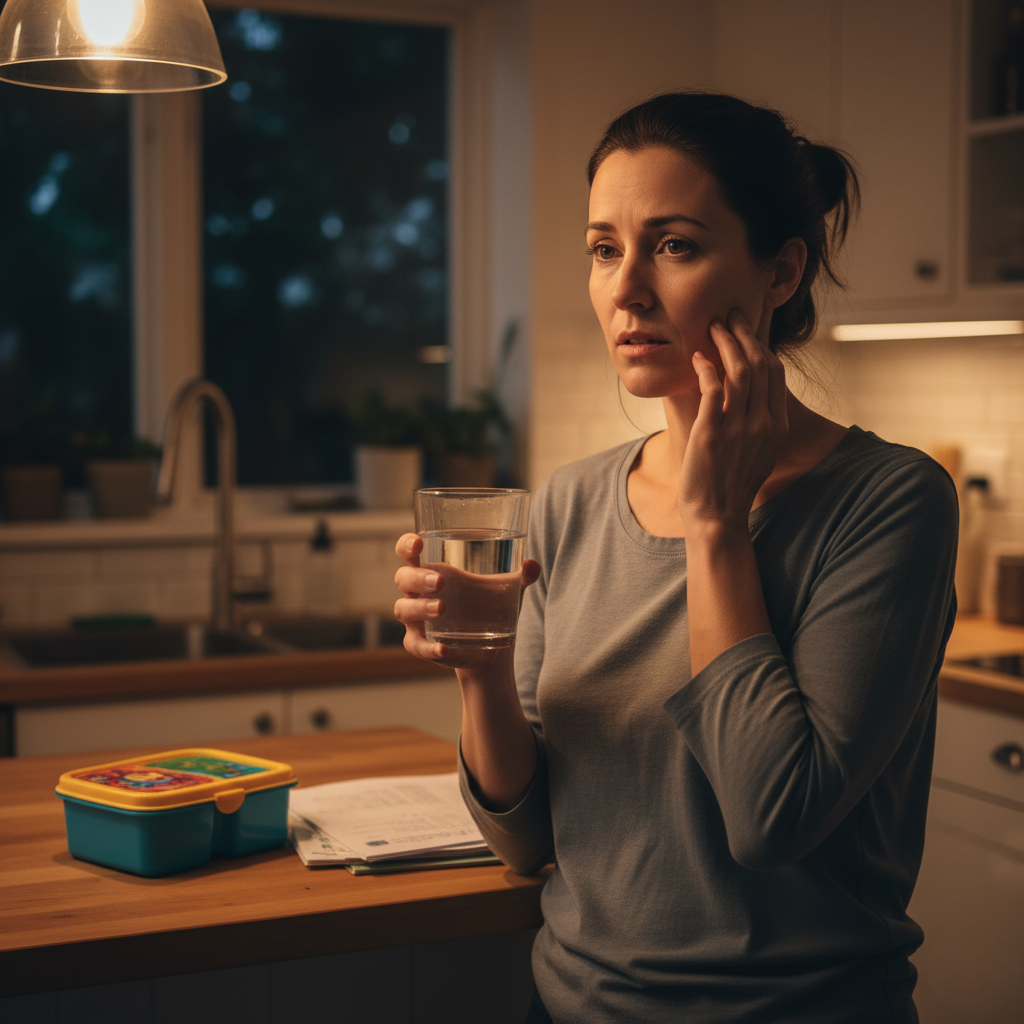
Maya noticed it the way most people do, by accident, in the quiet moment after a long day. She was standing at her kitchen sink, still in her work clothes, rinsing a spoon she had used for her son’s peanut butter. When she took a quick sip of cold water, a sharp little zing shot through one back tooth. Not unbearable, but specific, like someone flicked a nerve with a fingernail.
She paused, spoon in hand, and did the thing you have probably done too, she tested it again. Another sip. Another zing. Her shoulders tightened. “Please don’t be a cavity,” she thought, already bargaining with the universe. Tomorrow was packed with meetings, and she had promised her kids a movie night. A dental surprise felt like the worst possible bonus level.
Maya opened her phone and typed exactly what her brain was shouting, “Can you reverse a cavity”. The answers felt like a tug of war. One site said yes, another said no, and a third tried to sell her a miracle rinse that sounded like it was invented in a basement.
If you are in that same swirl of confusion, here is the truth told in a human way. Some early cavities can be reversed, but not the way people imagine. And knowing which kind you have can save you money, time, and that sinking feeling you get when you hear the word “drill.”
What Counts As A Cavity Anyway
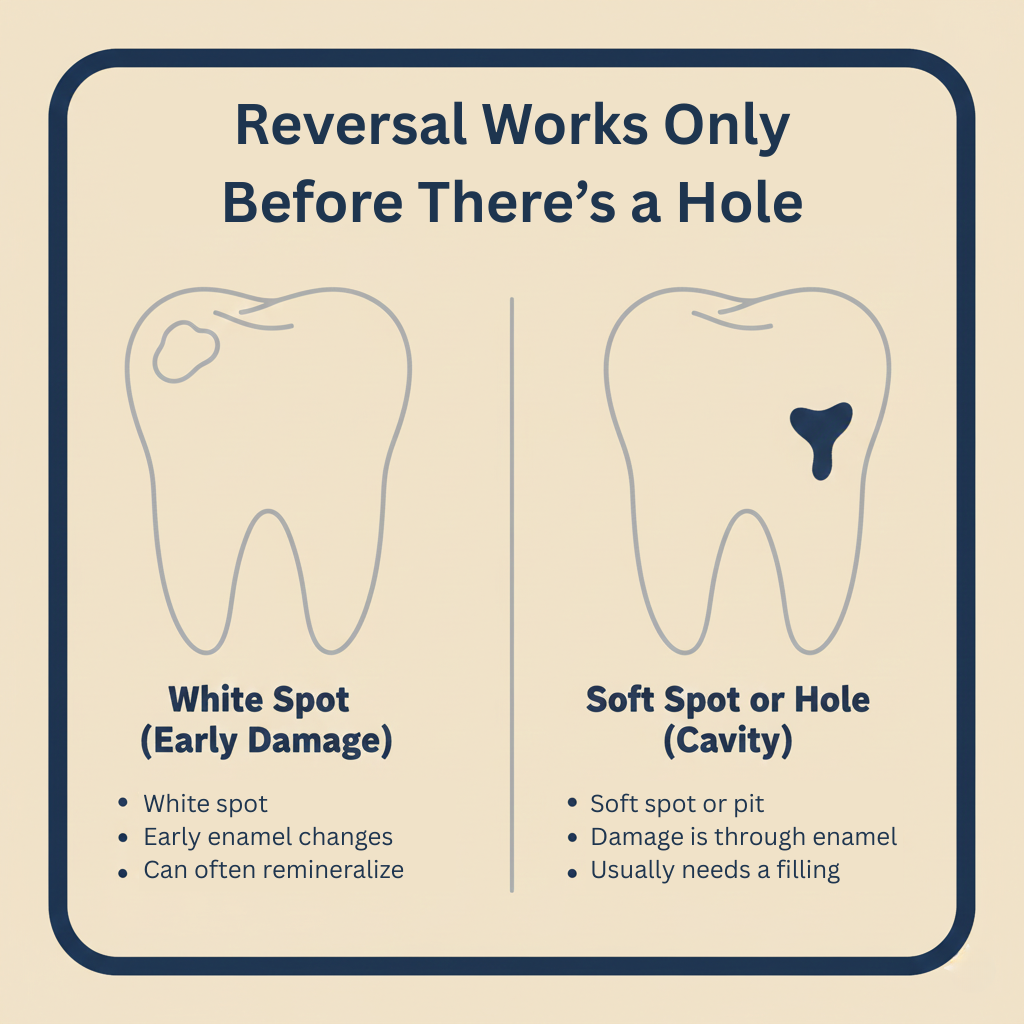
When most people say “cavity,” they picture a hole. A missing chunk of tooth, a crater you could point to. Dentists use the word more precisely. Early on, a cavity can be more like a weak spot, a softening, a place where the enamel is losing minerals, even before there is an actual opening.
Think of enamel like a tiled roof. Minerals are the tiles. Acid is the storm. A few tiles loosening does not mean your living room is flooded yet, but it is a warning that the weather is winning.
Here is the key idea that changes everything: You can rebuild minerals in enamel, but you cannot undrill a hole. Once a spot has broken through into a true cavity, especially into dentin, reversal is no longer the goal. At that point, the goal is a small, well done repair that stops the damage from spreading.
Maya didn’t know any of this yet. She just knew she hated the uncertainty. She had grown up with the kind of dental visits where nobody explained anything, and she still remembered the sound of the drill like it was a song stuck in her head. Her fear was not dramatic, it was learned.
So she did what I wish more people did earlier. She decided to get clarity before the problem picked a direction for her.
The Part You Actually Can Reverse
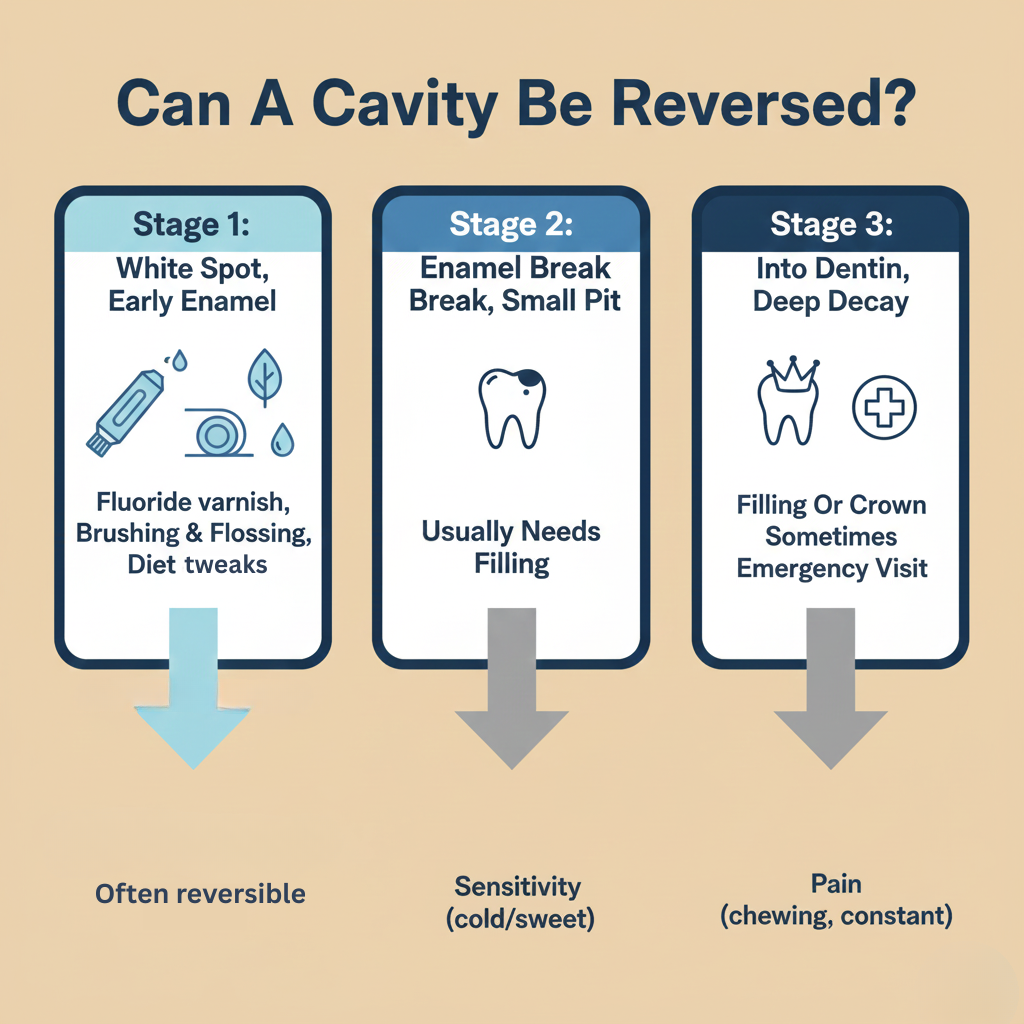
If your tooth is in the earliest stage of decay, you might be able to reverse it through remineralization. That sounds fancy, but it is actually your body’s natural repair process, just supported with the right tools.
Your mouth is constantly doing two opposite things:
- Demineralization, acids pull minerals out of enamel
- Remineralization, saliva and fluoride help put minerals back
If demineralization wins for too long, the enamel becomes porous. That is the white spot stage, sometimes seen near the gumline or between teeth. It is not “clean,” it is weakened. This stage can often be improved because enamel is like a dense mineral sponge, it can re-harden when the conditions are right.
Fluoride matters here because it helps enamel become more resistant to acid, and it also helps minerals re attach. It is like adding stronger bricks when you rebuild a wall. Saliva matters because it buffers acids and delivers minerals. Diet matters because frequent sugar and acidic drinks keep the storm clouds parked over the roof all day.
Maya stared at a photo online of “white spot lesions” and thought, “I don’t see anything like that.” Then she looked again, leaning close to her bathroom mirror, tilting her head like she was trying to hear her tooth. On the back molar near her gumline, she noticed a faint chalky patch that she had assumed was just light reflection.
That moment is common. Early decay is quiet. It does not announce itself with a siren. It whispers.
So Here Is Your Next Step
If you suspect a cavity, do not try to guess your way through it. Get a clear diagnosis, find out if it is reversible, and if it is not, keep the repair as small as possible.

What Maya Changed In One Week
Maya’s schedule was the kind that makes self care feel like a luxury item. She was a school counselor, always managing other people’s emergencies. Her breakfast was usually coffee, her lunch was whatever she could eat in the five minutes between student appointments, and her afternoon “treat” was sparkling water. She thought she was doing pretty well.
Then we talked about frequency. Not just what you eat, but how often. If you sip something acidic all day, your teeth never get a long calm window to recover. It is like picking at a scab every hour and wondering why it will not heal.
Maya did not need perfection, she needed strategy. So she tried a one week experiment:
- She kept her morning coffee, but stopped sipping it for two hours. She finished it within a set time.
- She swapped constant sparkling water for plain water most of the day. Sparkling water is not evil, it is just more acidic than still water.
- She added a fluoride toothpaste routine and stopped rinsing right after brushing. She spit, but did not wash away the helpful stuff.
- She flossed at night, not because floss is magical, but because plaque between teeth is like a tiny acid factory.

Within a week, her cold sensitivity decreased. That does not prove a cavity reversed, but it is a clue that inflammation and surface irritation were calming down.
Still, Maya wanted certainty. A tooth can feel better and still be decaying under the surface. That is why a real diagnosis matters.
When Reversal Stops And Repair Starts
Here is the part most viral posts skip because it is less exciting: You cannot reverse a hole. If decay has created a breakdown in enamel and moved into the softer layer underneath, called dentin, the structure is compromised. Dentin is more like wood than tile, it decays faster, and it cannot simply re-harden back into the tooth you had.
That does not mean doom. It means timing matters. Catching decay early can turn a big repair into a small one. It can mean the difference between a simple tooth colored filling and a larger restoration later.
Maya came in for an exam and x-rays, the kind that show what eyes cannot. We found two spots:
One area that looked like early enamel demineralization, a good candidate for remineralization support
One small area where the enamel had likely broken down, a tiny filling candidate
She sighed, then laughed, because sometimes humor is how we cope. “So I’m half a success story,” she said.
“You are a full success story,” I told her, “because you showed up while the problem was still small.”

Right then, in that moment of decision, this is what I want for you too: clarity without pressure. If you have sensitivity, a rough spot, food catching, or you just have a gut feeling, get it checked early.
If you are near Chino, you can schedule with CL Family Dentistry and talk it through with a team that explains things in plain language. Call +1 909-627-7514 or use the contact CL Family Dentistry here. If it has been a while since your last preventive visit, you can also read what to expect with preventive care and routine visits.
Your At Home Remineralization Plan
If your dentist confirms you have early enamel changes, you can support reversal with a plan that is simple, specific, and realistic.
Brush twice a day with fluoride toothpaste. At night matters most, because saliva flow drops while you sleep, and bacteria throw their little midnight party. Use a soft brush, take your time, and aim for two minutes. If you struggle with consistency, tie brushing to something you already do, like starting your shower or setting your alarm.
Floss daily, especially between molars. Between teeth is where sneaky cavities love to grow because toothbrush bristles cannot reach there well. If floss is hard, try floss picks or a water flosser. The method matters less than the habit.
Create “quiet time” for your teeth. This is the secret that feels unfair: even healthy snacks can hurt if you graze all day. Every time you eat or sip something with sugar or acid, your mouth drops into an acidic phase. Let your mouth recover by spacing snacks, and drink plain water between meals.
Ask about fluoride varnish if you are higher risk. This is a quick professional application that can help strengthen enamel, especially if you have dry mouth, frequent cavities, or sensitivity.

Maya’s favorite change was surprisingly emotional. She stopped thinking of her tooth as “bad” and started thinking of it as “in repair.” That shift matters. Shame makes people avoid care. Ownership brings people back.
The Payoff, And The Peace Of Mind
Maya chose a simple path. We supported the early enamel area with prevention and fluoride, and we repaired the tiny cavitated spot with a small tooth colored filling. She was surprised by how uneventful it felt. No drama, no lecture, just a calm fix and clear instructions.
Two weeks later, she emailed something that made me smile. She said she drank cold water again without thinking about it. “I forgot to be afraid,” she wrote. That is the real outcome patients want, not just a repaired tooth, but a brain that stops scanning for pain.
A few months after that, she came in for a cleaning and told me she had started coaching her kids through brushing like it was a team sport. “We call it tooth training,” she said, and her youngest apparently flexed his biceps after flossing.
That is how prevention spreads, not through fear, but through small wins that feel doable.
If you are noticing signs and you want answers, you can start with general dentistry care at CL Family Dentistry. And if you are dealing with pain that feels sudden or intense, do not wait it out, use the emergency dental guidance and help.

Categories:
FAQ
Can You Really Reverse A Cavity At Home?
Sometimes, if it is only early enamel demineralization, you can support remineralization with fluoride toothpaste, flossing, fewer acidic and sugary exposures, and good saliva flow. If there is a true hole or the decay has reached dentin, home care cannot rebuild missing tooth structure, and a filling is usually needed.
How Do I Know If Mine Is Still In The Reversible Stage?
You often cannot know by symptoms alone. Early decay can have no pain at all, and some sensitivity can come from gums or grinding. An exam and, when appropriate, x rays help determine whether the enamel is still intact or if there is breakdown that needs repair.
What Does A Reversible Cavity Look Like?
Many look like a chalky white spot on enamel, sometimes near the gumline or between teeth, and they can feel slightly rough. But not all are visible without special lighting and tools. That is why regular checkups matter, especially if you have had cavities before.
Will Fluoride Varnish Help, And Does It Hurt?
Fluoride varnish can be a great support for early lesions and sensitivity. It is quick, non-invasive, and not painful. It is painted on, sets fast, and you typically leave with simple instructions for eating and brushing afterward.
How Much Does It Usually Cost If I Need A Filling Instead?
Costs vary based on size, tooth location, and complexity. In general, a small filling is less costly and less time consuming than waiting until a tooth needs a larger restoration. Many PPO plans help with restorative care, and CL Family Dentistry accepts many common plans, including Delta Dental, Cigna, Anthem, Guardian, and more. If you are unsure, ask for an estimate and options, including CareCredit.
If My Tooth Stops Hurting, Can I Skip The Dentist?
I would not. Pain can come and go, and decay can progress quietly. If sensitivity improves after you change habits, that is great, but it does not confirm the decay is gone. A quick exam can tell you if you are truly stabilizing the area or if you need a small repair to prevent a bigger problem.
TESTIMONIALS
Patient Stories
Real experiences from our valued patients
"I absolutely love Dr. Lee and her entire team. I used to be deathly afraid of the dentist until I started coming here. She is very patient and answers any questions you may have honestly. 10/10 recommend coming to Dr. Lee."
Maria R.
PREVENTIVE CARE
"As an adult, I didn't realize I could still benefit from sealants. Dr. Choi explained how they could help prevent future cavities, and I'm so glad I got them. The whole experience was comfortable and professional."
James C.
DENTAL SEALANTS
"The entire staff at CL Family Chino is amazing. They took such great care of my son during his sealant appointment. He didn't feel a thing and was excited to show off his 'super teeth' afterward!"
Sarah T.
FAMILY DENTISTRY
Ready to take the next step?
Join thousands of Chino families who trust us with their smiles. We're here to make dental care easy, comfortable, and accessible for everyone.
Same-day emergency appointments
Flexible financing options available
Most insurance plans accepted
Complimentary new patient consultation

Thank you for booking your appointment!
We’ve received your request and will contact you soon to confirm the details. We look forward to seeing you at Loop Dental.

We couldn’t submit your form.
Something interrupted the process, possibly a slow connection or a temporary glitch. Try again in a moment. If your info disappeared, we're really sorry and ready to help if you need it.
Office Hours
Monday
9:00 AM - 5:00 PM
Tuesday
9:00 AM - 5:00 PM
Wednesday
9:00 AM - 5:00 PM
Thursday
9:00 AM - 5:00 PM
Friday
9:00 AM - 5:00 PM
Saturday - Sunday
Closed
CALL US
(909) 627-7514
Speak with our team
EMAIL US
info@clfamilychino.com
Send us an email
VISIT US
12530 Tenth St. Suite B Chino, CA 91710
Get directions
DENTAL EMERGENCY?
We offer same-day emergency appointments. Call us immediately at (909) 627-7514