
Back to Blogs

5 Signs You Might Need a Dental Crown

Dental crowns offer crucial protection and restoration for teeth with large cavities, cracks, post-root canal brittleness, severe wear, or significant cosmetic concerns.

August 5, 2026
5 min read
Matthew, in a burgundy hoodie, sits at his office desk in the evening, hand pressed to his jaw.
Back to Blogs

5 Signs You Might Need a Dental Crown

Matthew, in a burgundy hoodie, sits at his office desk in the evening, hand pressed to his jaw.

Dental crowns offer crucial protection and restoration for teeth with large cavities, cracks, post-root canal brittleness, severe wear, or significant cosmetic concerns.

August 5, 2026
5 min read

Recognizing the Need for a Dental Crown

You might need a dental crown if you have a tooth that is significantly damaged, decayed, or weakened. These custom-made caps restore the tooth's shape, size, strength, and appearance, protecting it from further harm and preserving its function within your bite.

A dental crown acts like a protective helmet for your tooth, encasing the entire visible portion above the gum line. This restoration is crucial for teeth that can no longer be effectively repaired with a standard filling due to the extent of the damage. At Choi & Lee Family Dentistry in Chino, Dr. Diana Lee often recommends crowns to prolong the life of compromised teeth, preventing extraction and maintaining your oral health.

Ignoring the signs that you might need a dental crown can lead to worsening conditions, including increased pain, infection, or even tooth loss. Early intervention with a crown can often save a tooth, making it a cost-effective and health-preserving choice in the long run.
A dental crown, made of bright white ceramic, sits perfectly fitted onto a model of a natural tooth, illustrating its protective function.

Large Cavities or Significant Decay

If you have a cavity that is too extensive for a traditional dental filling, a dental crown is often necessary to restore the tooth's structural integrity. A large cavity weakens the tooth, making it susceptible to fracture and further decay, which a crown can prevent.

When a cavity grows too large, there simply isn't enough healthy tooth structure left to support a filling. Attempting to place a large filling in such a tooth would leave it vulnerable to breaking under the pressure of chewing. Dr. Diana Lee carefully assesses the size and depth of decay to determine the most appropriate treatment.

Why a Crown for Large Cavities?

  • Structural Reinforcement: A crown covers the entire tooth, holding together weakened parts and preventing fractures.
  • Protection Against Further Decay: The crown seals off the tooth, making it less prone to new decay in the treated area.
  • Enhanced Durability: Crowns are designed to withstand significant biting forces, unlike large fillings that might wear down or crack.
  • Restored Function: The crown restores the tooth's original shape, allowing you to chew and speak comfortably.
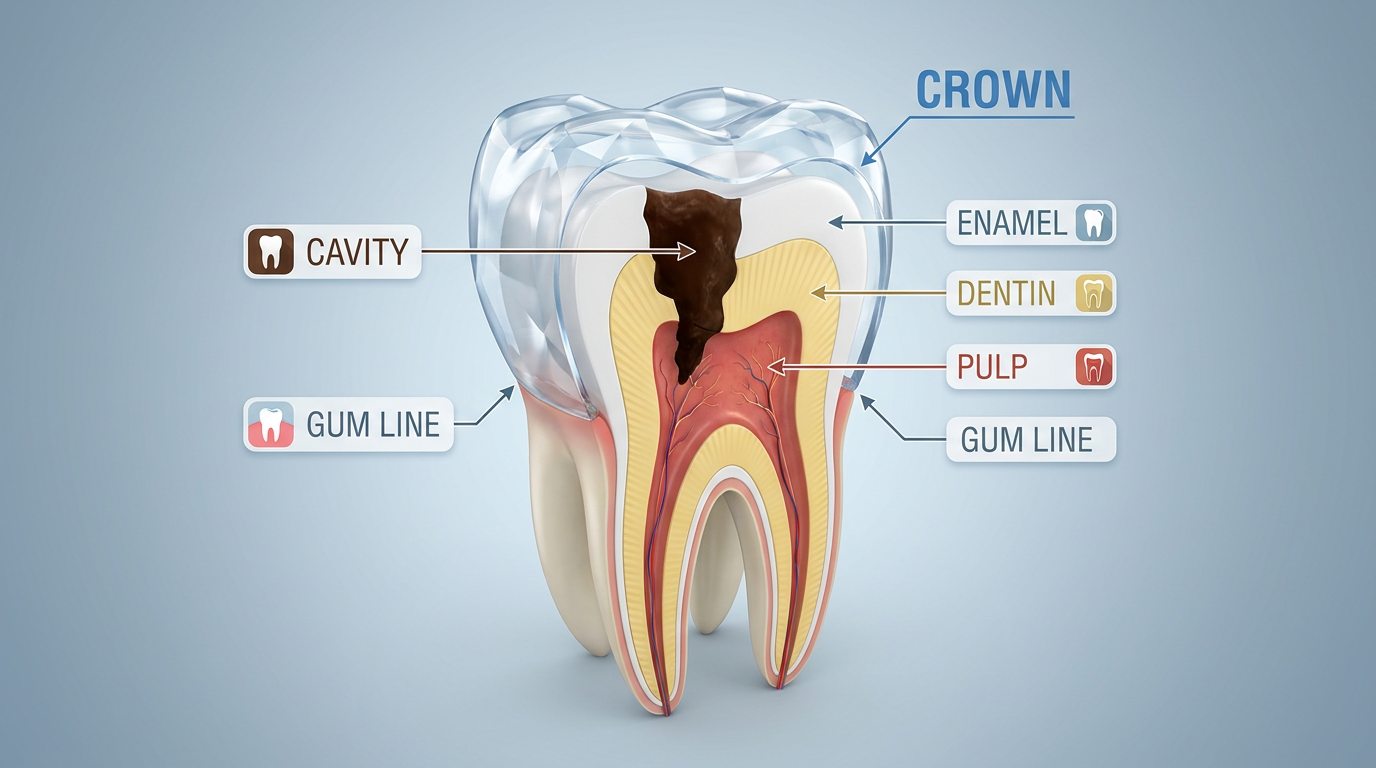
A highly detailed cross-section diagram of a molar tooth showing a large cavity extending deep into the dentin, with a translucent, protective dental crown seamlessly placed over the entire tooth structure.

How a Cracked or Fractured Tooth Benefits From a Crown

A cracked or fractured tooth often requires a dental crown to prevent the crack from spreading and to protect the inner sensitive pulp from infection. Without a crown, chewing pressure can cause the crack to deepen, leading to severe pain or even tooth loss.

Cracks in teeth can range from minor surface lines to deep fractures that extend into the tooth's root. Even seemingly small cracks can allow bacteria to penetrate, leading to infection and pain. A crown provides a comprehensive solution by holding the cracked portions together and shielding the tooth.

Benefits of Crowns for Cracked Teeth

  • Stabilizes the Tooth: The crown acts like a band, holding the cracked pieces of the tooth firmly together.
  • Prevents Crack Propagation: By encasing the tooth, a crown stops the crack from extending further down the tooth or into the root.
  • Reduces Sensitivity and Pain: Cracks can expose microscopic tubules, leading to sensitivity. A crown covers these areas, reducing discomfort.
  • Avoids Extraction: In many cases, a crown can save a cracked tooth that would otherwise need to be extracted, preserving your natural smile.
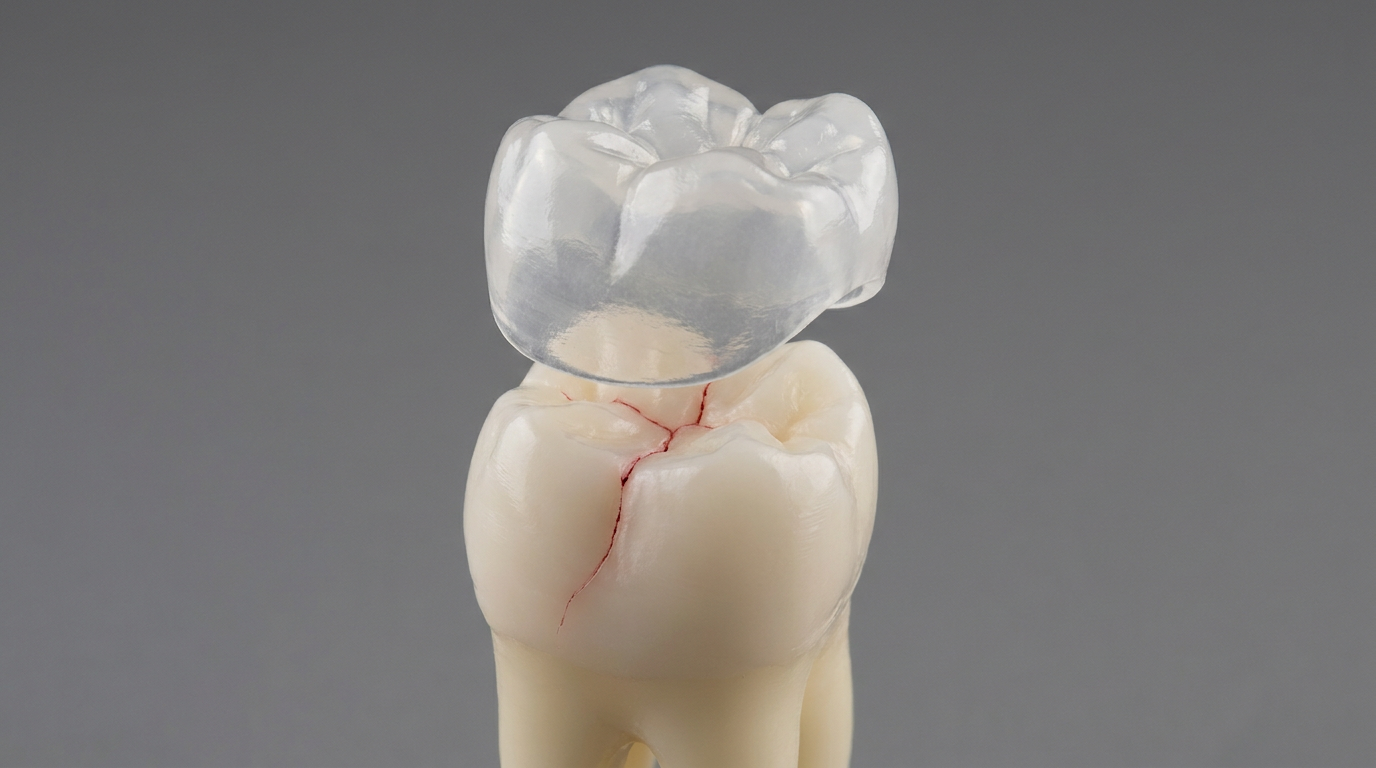
A close-up view of a cracked molar tooth, with a faint red line indicating the crack, and a transparent overlay of a dental crown showing how it would encompass and stabilize the fractured tooth.

Dental Crown After Root Canal Treatment

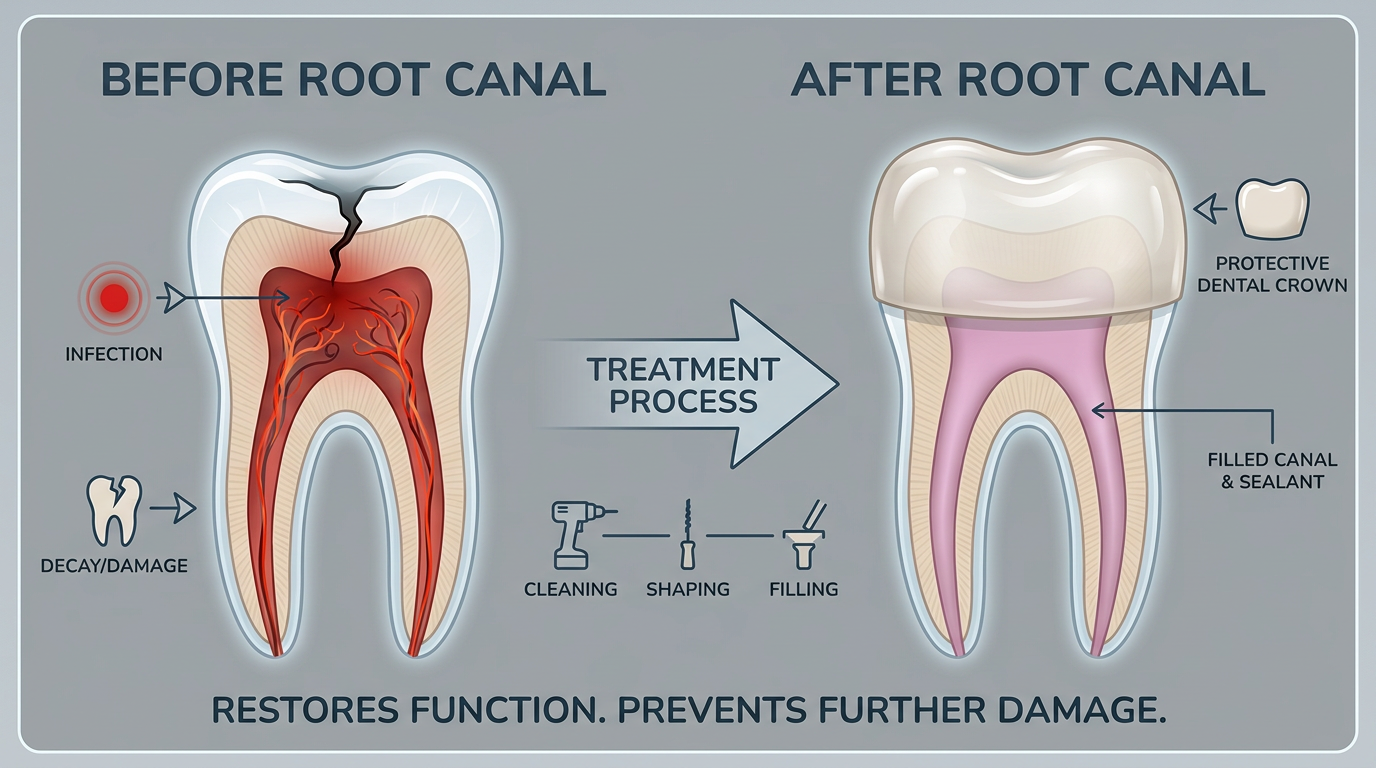
After a root canal procedure, a dental crown is almost always recommended because the tooth becomes brittle and more susceptible to fracture. The crown provides crucial protection and restores the tooth's strength and function following the removal of its pulp.

A root canal saves an infected tooth by removing the diseased pulp. However, once the pulp is removed, the tooth loses its internal hydration and becomes more fragile. This makes it vulnerable to breaking, especially a molar or premolar which experiences significant chewing forces. Dr. Diana Lee ensures that after a successful root canal, patients at Choi & Lee Family Dentistry receive the necessary crown to protect their newly treated tooth and prevent future complications. This protective measure is vital for the long-term success of the root canal.

A schematic diagram illustrating a tooth before and after a root canal, with the "after" tooth showing the filled root canal and a meticulously placed dental crown covering the treated tooth.

Schedule Your Crown Consultation

If you're concerned about a damaged or weakened tooth, don't wait for the problem to worsen. Contact Choi & Lee Family Dentistry in Chino today to schedule a consultation. She can assess your dental health, discuss whether a crown is right for you, and create a personalized treatment plan to restore your smile and oral health.

Severely Worn Teeth

Severely worn teeth, often due to grinding (bruxism), acid erosion, or improper bite alignment, are strong candidates for dental crowns. Crowns restore the tooth's original height and shape, protecting the remaining structure and improving bite function.

When teeth are significantly worn down, they can become sensitive, cause bite problems, and even lead to jaw pain. The enamel, which protects the tooth, can be completely eroded, exposing the softer dentin beneath. Restoring these teeth with crowns not only protects them but also contributes to overall oral health.

Why Crowns Address Worn Teeth

  • Restores Bite Alignment: Crowns can rebuild the tooth to its proper height, correcting issues caused by uneven wear.
  • Protects Enamel and Dentin: By covering the worn surfaces, crowns prevent further damage and sensitivity.
  • Enhances Appearance: Worn teeth often look short or uneven. Crowns can dramatically improve the aesthetics of your smile.
  • Prevents Further Damage: For those who clench or grind, crowns provide a durable barrier against the forces that cause wear.
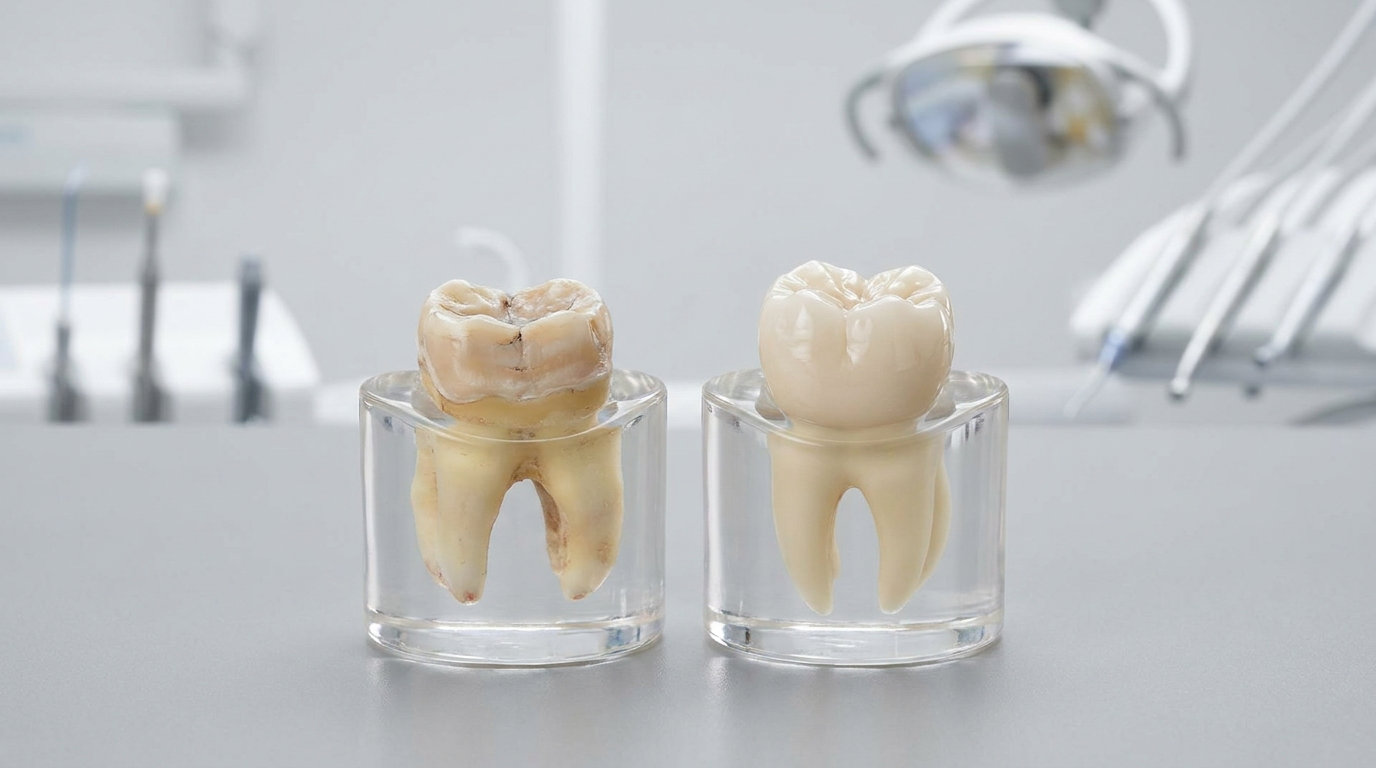
A conceptual image showing two molars side-by-side: one heavily worn down with flat surfaces, and the adjacent molar restored with a perfectly shaped and proportioned dental crown.

Cosmetic Concerns and Dental Crowns

Dental crowns can address significant cosmetic concerns such as severely discolored, misshapen, or poorly aligned teeth that cannot be corrected by other means. A crown completely encases the tooth, offering a dramatic improvement in its appearance and smile aesthetics.

While other cosmetic dentistry options like teeth whitening or veneers can address minor aesthetic issues, a dental crown is ideal when a tooth has more extensive cosmetic imperfections. For example, if a tooth is severely stained and unresponsive to teeth whitening, or if its shape is significantly irregular, a crown can provide a uniform and natural-looking solution. Dr. Diana Lee works with patients to select the ideal shade and shape for their crowns, ensuring a seamless blend with their natural teeth.

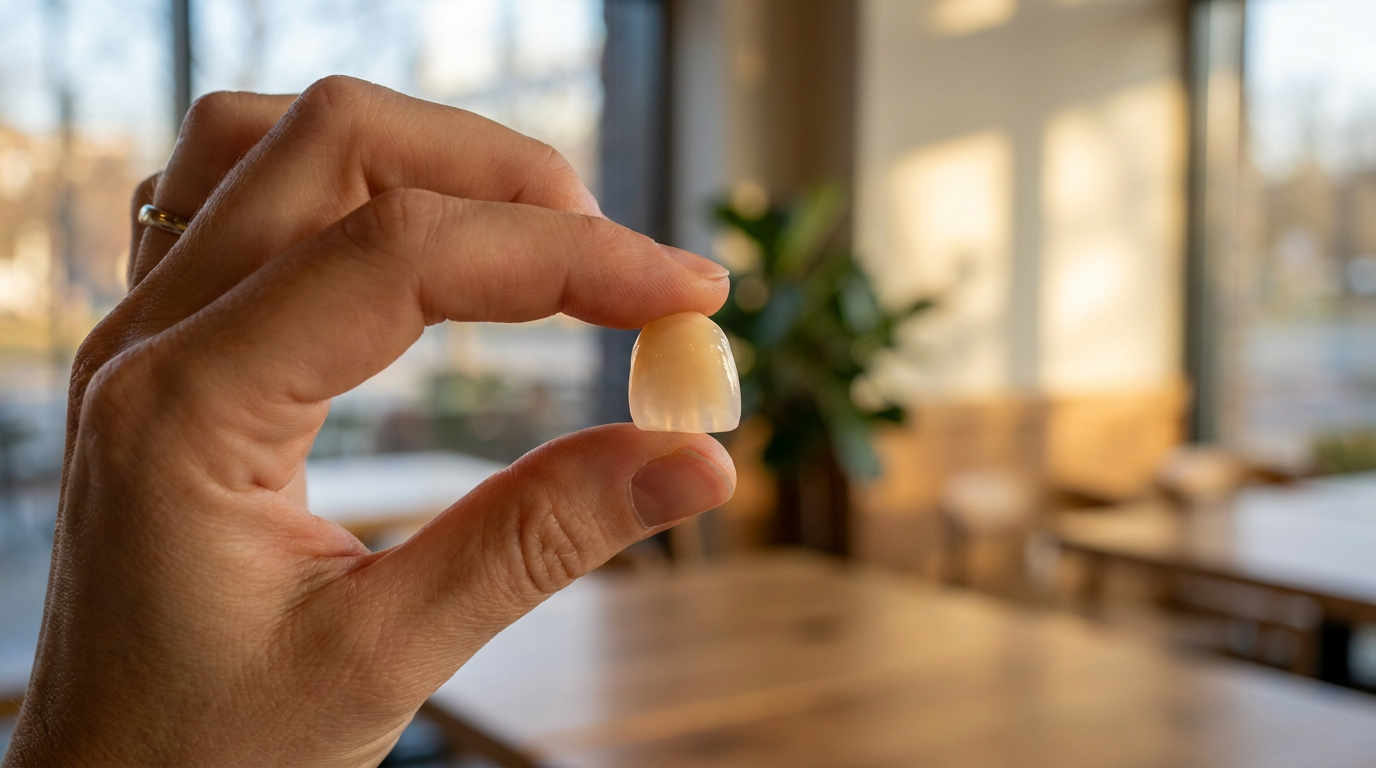
A person's hand holding a single, highly aesthetic porcelain dental crown up to natural light, showcasing its translucent quality and natural shade against a soft, blurred background.

Understanding Different Dental Crown Types

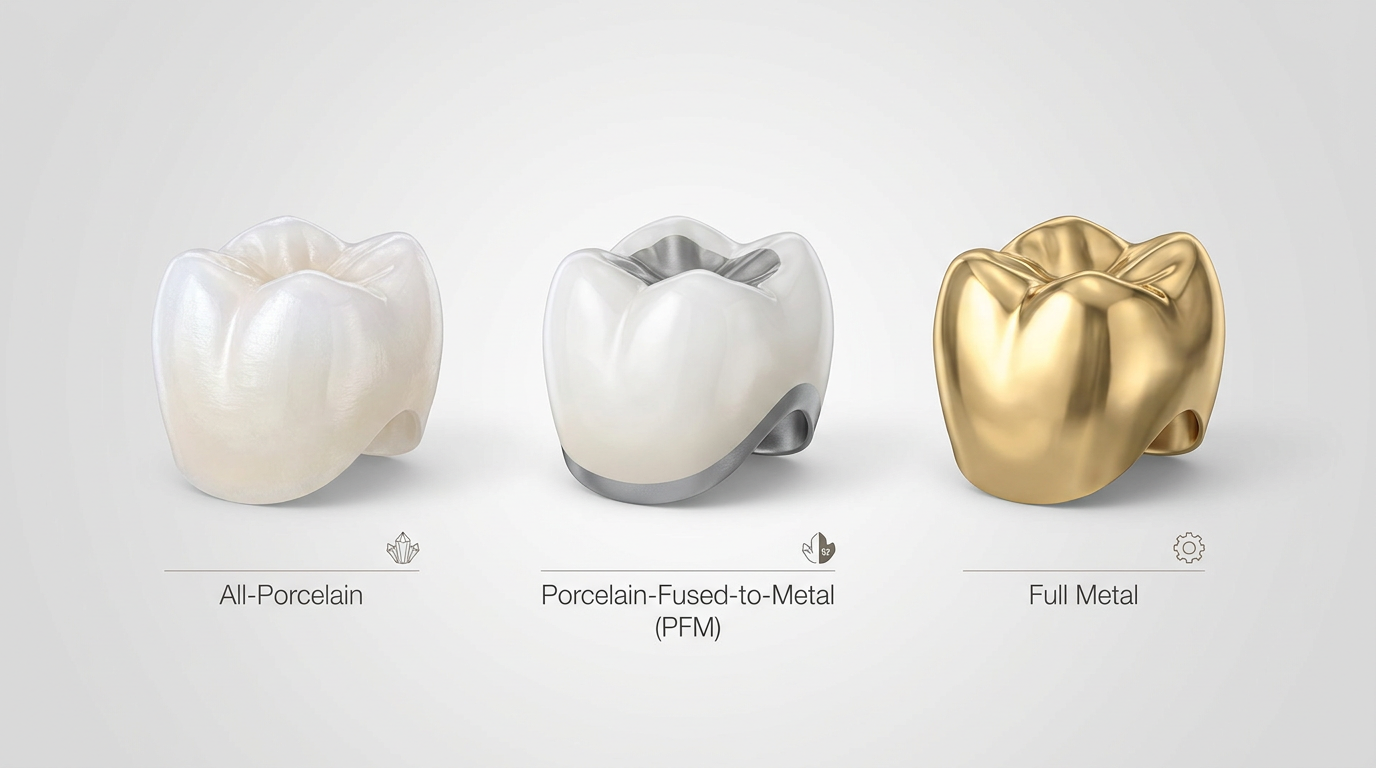
Dental crowns are available in various materials, each offering different benefits in terms of aesthetics, durability, and cost. Common types include porcelain, porcelain-fused-to-metal (PFM), and metal crowns, chosen based on the tooth's location and patient preferences.

The choice of crown material depends on several factors, including the tooth's position in the mouth, the amount of chewing force it endures, your aesthetic goals, and any metal sensitivities. During your consultation at Choi & Lee Family Dentistry, Dr. Diana Lee will discuss these options in detail.

Crown Material Considerations

  • Porcelain Crowns: These are highly aesthetic, mimicking the translucency of natural teeth, making them ideal for front teeth. They are also metal-free.
  • Porcelain-Fused-to-Metal (PFM) Crowns: PFM crowns offer a strong bond of porcelain to a metal substructure, providing both aesthetic appeal and durability. They are a good compromise for back teeth.
  • Metal Crowns: Typically made of gold alloys or other base metals, metal crowns are exceptionally strong and highly resistant to fracture. They are often chosen for molars where chewing forces are highest and aesthetics are less of a concern.
A comparison graphic showing three distinct dental crowns side-by-side on a light grey background: one all-porcelain (white), one porcelain-fused-to-metal (white with metal base visible), and one full metal (gold-colored).

What This Means for Your Oral Health

When you recognize any of these signs, it's crucial to seek professional dental evaluation. Delaying treatment for a compromised tooth can lead to more complex and costly problems, such as infection spreading to surrounding teeth, persistent pain, or ultimately, the need for a tooth extraction. At Choi & Lee Family Dentistry in Chino, Dr. Diana Lee and her team are dedicated to preserving your natural teeth whenever possible.

A timely dental crown can protect a vulnerable tooth, restore its function, and enhance your smile. Whether you're experiencing pain, have a visible crack, or are concerned about a large filling, a comprehensive examination can determine if a dental crown is the right solution for you. We provide personalized care, explaining all your options and ensuring you feel comfortable and informed every step of the way. Prioritizing your oral health can prevent minor issues from becoming major dental emergencies.

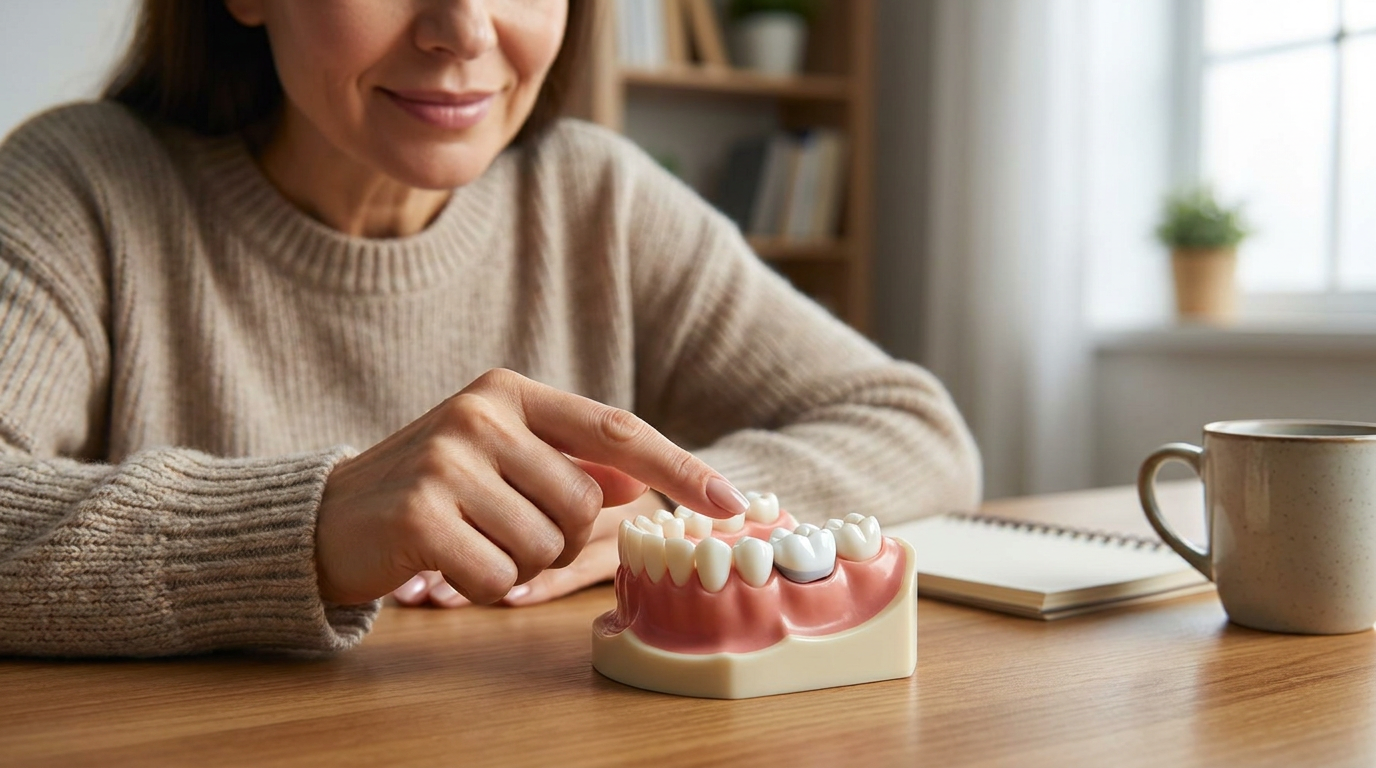
Dr. Diana Lee, wearing a clean white lab coat over a light blue scrub top, gently demonstrating a model of a dental crown to a concerned patient (out of frame), her expression reassuring and professional, in a modern dental operatory.

Frequently Asked Questions

1. What is a dental crown?
A dental crown is a custom-made, tooth-shaped cap placed over a damaged tooth to restore its shape, size, strength, and appearance.

2. How long do dental crowns last?
With proper care, dental crowns can last 5 to 15 years or even longer, depending on the material and your oral hygiene habits.

3. Is getting a dental crown painful?
The procedure for getting a dental crown is performed under local anesthesia, so you should not feel any pain during the treatment.

4. What is the difference between a crown and a filling?
A filling repairs a small portion of a tooth affected by decay, while a crown covers the entire visible part of a tooth to restore significant damage or weakness.

5. Can a crown fix a chipped tooth?
Yes, a dental crown can effectively fix a chipped tooth, especially if the chip is large or compromises the tooth's structure.

6. How many appointments does a crown typically require?
Typically, getting a dental crown requires two appointments: one for preparation and impressions, and another for placement.

7. What should I do if my crown falls off?
If your crown falls off, contact Choi & Lee Family Dentistry immediately. Keep the crown safe and avoid chewing on that side until you can be seen by Dr. Diana Lee.

8. Can I eat normally with a temporary crown?
While you can eat with a temporary crown, it's best to avoid sticky, hard, or chewy foods to prevent it from dislodging.

9. Are dental crowns covered by insurance?
Many dental insurance plans offer some coverage for dental crowns, especially when deemed medically necessary. We can help verify your benefits.

10. Does Dr. Diana Lee offer different types of crowns?
Yes, Dr. Diana Lee offers various crown materials, including porcelain, porcelain-fused-to-metal (PFM), and metal crowns, tailored to your specific needs.

TESTIMONIALS

Patient Stories

Real experiences from our valued patients

"I absolutely love Dr. Lee and her entire team. I used to be deathly afraid of the dentist until I started coming here. She is very patient and answers any questions you may have honestly. 10/10 recommend coming to Dr. Lee."

Maria R.

PREVENTIVE CARE

"As an adult, I didn't realize I could still benefit from sealants. Dr. Choi explained how they could help prevent future cavities, and I'm so glad I got them. The whole experience was comfortable and professional."

James C.

DENTAL SEALANTS

"The entire staff at Choi & Lee Family Dentistry in Chino, CA is amazing. They took such great care of my son during his sealant appointment. He didn't feel a thing and was excited to show off his 'super teeth' afterward!"

Sarah T.

FAMILY DENTISTRY

DENTAL INSIGHTS

Related Blog Posts

Stay informed with expert dental tips and the latest oral health news

July 9, 2026

Why Regular Dental Checkups Matter for Your Health

Regular dental checkups are essential for maintaining oral health and preventing minor issues from escalating into more serious and costly problems.

July 9, 2026

How to Find the Best Dentist Near You

Discover how Samantha found her best dentist near her in Chino, overcoming initial overwhelm to secure quality dental care.

July 8, 2026

Professional Teeth Whitening: What to Expect

Professional teeth whitening can dramatically enhance your smile and confidence, offering customized solutions and lasting results under expert dental care.

View All Articles

Ready to take the next step?

Join thousands of Chino families who trust us with their smiles. We're here to make dental care easy, comfortable, and accessible for everyone.

Same-day emergency appointments

Flexible financing options available

Most insurance plans accepted

Complimentary new patient consultation

Book Your Appointment

Thank you for booking your appointment!

We’ve received your request and will contact you soon to confirm the details. We look forward to seeing you at Choi & Lee Family Dentistry.

We couldn’t submit your form.

Something interrupted the process, possibly a slow connection or a temporary glitch. Try again in a moment. If your info disappeared, we're really sorry and ready to help if you need it.

Office Hours
Monday
8:00 AM - 5:00 PM
Tuesday
8:00 AM - 5:00 PM
Wednesday
7:00 AM - 4:00 PM
Thursday
7:00 AM - 4:00 PM
Friday
7:00 AM - 4:00 PM
Saturday - Sunday
Closed
CALL US
(909) 627-7514

Speak with our team

EMAIL US
info@clfamilychino.com

Send us an email

VISIT US

12530 Tenth St. Suite B Chino, CA 91710

Get directions

DENTAL EMERGENCY?

We offer same-day emergency appointments. Call us immediately at (909) 627-7514